Secondary Data Collection Methods
Secondary data is existing information collected by someone else and used for research purposes. Sources include:
1 Published Data
Books, journals, articles, newspapers, and government reports.
Example: World Bank economic reports.
2 Online Databases & Websites
Research articles, company reports, and statistical data available on websites.
Example: Google Scholar, PubMed, and financial reports from company websites.
3 Institutional & Organizational Records
vInternal reports, sales records, customer databases, and business analytics.
vExample: A university analyzing its student performance records.
4 Social Media & Web Analytics
Data from platforms like Facebook, Twitter, and Google Analytics.
Used in digital marketing and consumer behavior analysis.
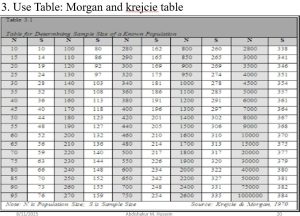
- Sample determination.
Quantitative research sample size determinations:
1.Use formula
2.Using Online Calculators:
- Qualtrics Sample Size Calculator
🔗 https://www.qualtrics.com/blog/calculating-sample-size/
- B. SurveyMonkey Sample Size Calculator
🔗 https://www.surveymonkey.com/mp/sample-size-calculator/
- Raosoft Sample Size Calculator
🔗 http://www.raosoft.com/samplesize.html
qQualitative research sample size determinations:
Common Qualitative Approaches to Determine Sample Size
1.Rule of Thumb:
Many qualitative studies use a sample size of 10–30 participants, depending on the research question and methodology.
2 Saturation-Based Sampling:
Researchers collect data iteratively and stop recruiting participants when saturation is achieved.
Sampling technique or sample selection techniques
probability sampling Techniques:
Random sampling: are selected by using chance method or random numbers so every possible sample of specified size has an equal chance of being selected.
Systematic random sampling : a statistical sampling techniques that involves selecting every Kth , them in the population after a random selecting point between 1 and k. the value of k is determined as the ratio of the population size over the desired sample size
Stratified random sampling : a statistical sampling method in which the population is divided into subgroups called strata, so that each population item belong only on stratum, the objective is to form strata such that the population value of interest with in each stratum are as much a like possible. Sample item are selected from each stratum using random sample method
Clustered sampling : a method by which the population is divided into groups or clusters that each intended to be mini population.
A sample random sample of M clusters is selected, the item chosen from the cluster can be selected using any probability sampling techniques.
Summary of sampling technique
Random : subjects are selected by random numbers.
systemic : subjects are selected by using every kth numbers after the first subjects is randomly selected from 1 through k.
Stratified :subjects are selected by dividing up the population into groups (strata) and subjects are randomly selected with in groups
Cluster: subjects are selected using intact groups that representative of the population
Non- probability sampling
This is also referred to as biased sampling and is used when the researcher is not interested to a good sample that can represent a population. Non- probability sampling takes the following forms.
Purposive sampling
This is where one select participants who have the required information according to the objectives of his/her study. The participants are selected according to the researchers interest in them. But the researcher must specify the procedure of choosing the participants
Quote sampling
This is based on where the researcher selected a different portions in different groups
For example
teachers of primary schools 10
Hospital nurses 15
Shop owners 20
Convenient sampling or accidental sampling
This is where one selects participant depending on how easily he/she can find them for example radio programmer, they ask listeners who can call in. this method is biased. The researcher uses the most available participants.
Snowball sampling
This method is used when the population of interest is not readily available
- HIV-AIDS victims : find one person by all means , next ask him if he know someone else than continue this until you get the required sample.
- DRUG LEADERS, GANGS
Validity and reliability
Validity refers to whether an instrument measures what it was designed to measure.
ØTo ensure validity, there are various methods used,
- one is use of experts judgment the researcher gives the instruments to experts in his/her field they judge whether the instrument is valid
- or not the researcher can compute the content validity from index (CVI).
CVI = number of items(questions) declared valid/total number of questions
For example if have a27 questionnaire which contain 4o questions and number of questions declared valid are 30 than we can compute whether it is valid or not.
CVI 30/40 = 0.75, 75%.
Reliability: which is whether an instrument can be interpreted consistently across different situations., which means that each time an instrument is used to measure it will give the same result.
One way to ensure or test for reliability is through test – re- test method, here the researcher administers the instrument to a few people and after a period of around two weeks, you administer it in the same way people, results of the two tests are compared, if they differ a lot, the instrument is not reliable.
vTypes of variables:
- Independent variables: A variable that we think is a cause is known as an independent variable
- Dependent Variables: A variable that we think is an effect is called a
dependent variable
vTypes of data collection methods:
- Independent design/ between groups: is to manipulate the independent variable using different participants.
- Repeated measures design/ between subjects: is to manipulate the independent variable using the same participants
Types of research studies
- Observational studies: the morally observed what is happening what has happened in the past tries to draw conclusion based on this observation.
- Experimental studies: the researchers manipulate variables and tries to determine how this manipulation influences other variables.