What is Job Design?
The job design is the process of organising tasks, duties, and responsibilities into a productive unit of work.
- Ensures alignment with organisational goals
-
Influences employee motivation, satisfaction, and performance
Importance of Job Design in Performance Planning
🔹Clarifies role expectations and deliverables
🔹Improves individual and team productivity
🔹Reduces redundancy and overlap in tasks
🔹Enhances accountability and ownership
🔹Facilitates fair performance evaluation
Elements of Job Design
🔵➤Task Identity – Completeness of a whole task
🔵➤Task Significance – Impact on others or the organisation
🔵➤Skill Variety – Use of different skills and talents
🔵➤Autonomy – Level of independence and discretion
🔵➤Feedback – Information on performance effectiveness
Approaches to Job Design
🔹Job Enlargement – Expanding task variety
🔹Job Enrichment – Adding responsibility and autonomy
🔹Job Rotation – Switching tasks for flexibility and learning
🔹Job Simplification – Breaking down tasks for efficiency
Linking Job Design to Performance Planning
1.Start with job analysis: identify tasks, skills, conditions
2. Define performance objectives based on job roles
3. Establish measurable indicators tied to each duty
4. Align KRA/KPIs with well-structured job descriptions
5. Integrate into performance appraisals and development plans
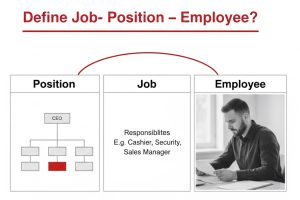
• Job – Consists of a group of tasks that must be performed for an organization to achieve its goals
• Position- Collection of tasks and responsibilities performed by one person; there is a position for every individual in an organization
• Job analysis – systematic process of determining the skills, duties, and knowledge required for performing jobs in an organization
• Job description – document providing information regarding tasks, duties, and responsibilities of job
• Job specification – minimum qualifications to perform a particular job