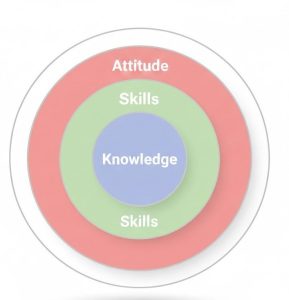
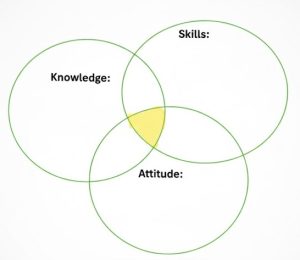
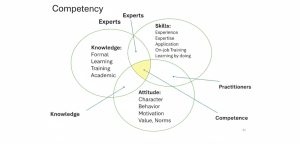
Components of Competencies
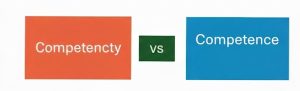
| Aspect | Competency | Competence |
|---|---|---|
| Definition | The combination of related knowledge, skill and complementing attributes | The ability to apply knowledge and skills to achieve intended results |
| Focus | Potential and capability | Performance and application in real situations |
| Components | Skills, knowledge, abilities, behaviors | Performance, outcome |
| Purpose | To define and assess what is required for success | To measure and evaluate actual performance and results |
| Assessment | Often assessed through assessments, surveys, and evaluations of attributes | Evaluated through performance reviews, achievements, and practical applications |
| Examples | Communication skills, leadership abilities, emotional intelligence | Successfully leading a project, meeting sales targets, effective team management |
| Use in HR | Designing training programs, creating job descriptions, setting development goals |
Evaluating employee performance, measuring job effectiveness, and assessing results |
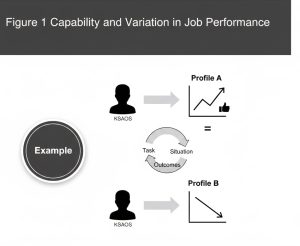
Evaluating employees on the competencies that yo u have determined are associated with superior job performance – this is a measurement of the behavioural characteristics that impact results.
➥ in performance outcome key goal/objectives are standards for achievement that about what must be accomplished
➥in competence behaviour are needed to accomplish work goal so its about how it must be accomplished
Competencies
It is a set of skills and behavioural characteristics essential for high level performance of the job and the tasks expected to be done.
• These behavioural characteristics relate to corporate, departmental and individual levels.
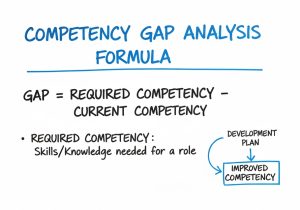
• The Gap between the competency level required by the job responsibilities and the actual level of the competencies the employee displays are identified and measured (competencies Gap Analysis).
COMPETENT Persons
on the basis of training, education or experience:
Process Blocks:
-
Determination of necessary competence
-
Job descriptions, job evaluation exercises, job analysis.
-
May be a verbal description.
-
-
Actions taken to acquire the necessary competence
-
(e.g. training, hiring, On the Job Training, mentoring, reassigning, adjusting job, subcontracting)
-
-
Evaluation of effectiveness of those actions
-
(e.g. Observation of performance, examination of results of tasks and projects, tests)
-
-
Retain documented information as evidence of competency, and qualifications (if required)
-
(e.g. diplomas, licenses, resumes, completion of training, performance reviews)
-